
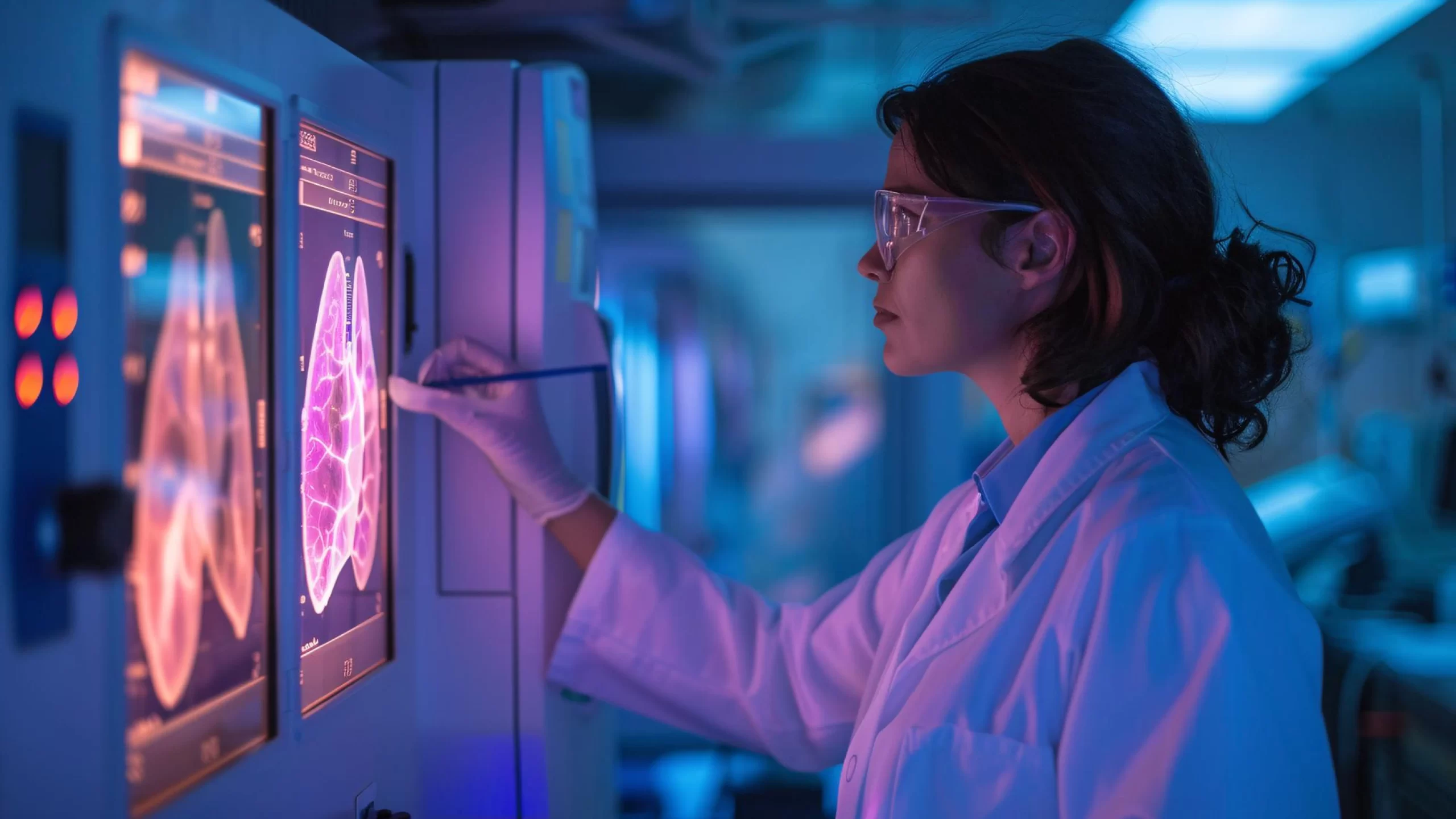
Is Artificial Intelligence Improving Cancer Detection? How AI Is Transforming Early Cancer Diagnosis
Artificial Intelligence (AI) is revolutionizing healthcare, and one of its most promising applications is early cancer detection. By analyzing medical images, pathology slides, and patient data with remarkable speed and accuracy, AI is helping doctors identify cancers earlier than ever before. While AI does not replace experienced oncologists or radiologists, it serves as a powerful decision-support tool that can improve diagnostic accuracy and patient outcomes.
How AI Helps Detect Cancer
AI systems use advanced machine learning and deep learning algorithms to identify subtle abnormalities that may be difficult for the human eye to detect. These technologies are trained on thousands of medical images and clinical datasets, enabling them to recognize patterns associated with various types of cancer.
AI is currently being used to assist in the detection of:
- Breast cancer through mammography
- Lung cancer using low-dose CT scans
- Colorectal cancer during colonoscopy
- Skin cancer through dermoscopic imaging
- Prostate cancer using MRI
- Brain tumors through MRI and CT scans
Benefits of AI in Cancer Detection
- Earlier Diagnosis
Early detection significantly increases the chances of successful treatment. AI can identify suspicious lesions at an earlier stage, allowing doctors to begin treatment before the disease progresses.
- Improved Diagnostic Accuracy
AI helps reduce missed cancers and minimizes false-positive results by providing an additional layer of analysis. This supports radiologists and pathologists in making more informed decisions.
- Faster Reporting
AI can analyze medical images within seconds, helping reduce reporting times and allowing specialists to prioritize urgent cases more efficiently.
- Better Screening Programs
Countries with large populations, including India, can benefit from AI-assisted screening programs that help manage increasing numbers of patients while maintaining high-quality care.
AI in Breast Cancer Screening
One of the most successful applications of AI is in breast cancer screening. AI-assisted mammography can highlight suspicious areas that require closer evaluation, helping radiologists detect small tumors that might otherwise be overlooked. It can also reduce unnecessary recalls by improving the interpretation of screening mammograms.
AI in Lung Cancer Detection
Low-dose CT scans are widely used to screen individuals at high risk for lung cancer. AI algorithms can identify tiny lung nodules, assess their characteristics, and assist doctors in determining which patients require further investigation.
AI in Pathology
Pathologists examine tissue samples under a microscope to confirm cancer. AI-powered digital pathology systems can rapidly analyze biopsy slides, identify abnormal cells, and assist in grading tumors, improving both speed and consistency.
Is AI Replacing Cancer Specialists?
No. AI is not replacing oncologists, radiologists, or pathologists. Instead, it acts as a clinical support tool that enhances their expertise. The final diagnosis and treatment plan are always made by qualified healthcare professionals who consider the patient’s complete medical history, examination findings, imaging, laboratory results, and biopsy reports.
Challenges and Limitations
Although AI has tremendous potential, there are still challenges:
- AI requires high-quality medical data for accurate analysis.
- Algorithms must be validated across diverse populations.
- Human oversight remains essential to avoid diagnostic errors.
- Patient privacy and data security must be carefully maintained.
The Future of AI in Cancer Care
As AI technology continues to evolve, it is expected to play an even greater role in cancer care. Future applications may include predicting treatment response, identifying patients at higher risk of recurrence, personalizing treatment plans, and accelerating drug discovery. Combined with advances in genomics and precision medicine, AI is expected to make cancer diagnosis more accurate, efficient, and personalized.
Conclusion
Artificial Intelligence is transforming the way cancer is detected by improving the speed, accuracy, and efficiency of diagnosis. From mammography and CT scans to digital pathology and advanced imaging, AI is helping healthcare professionals detect cancer earlier and make better clinical decisions. While AI is not a substitute for experienced specialists, it is becoming an invaluable partner in delivering timely and high-quality cancer care.